
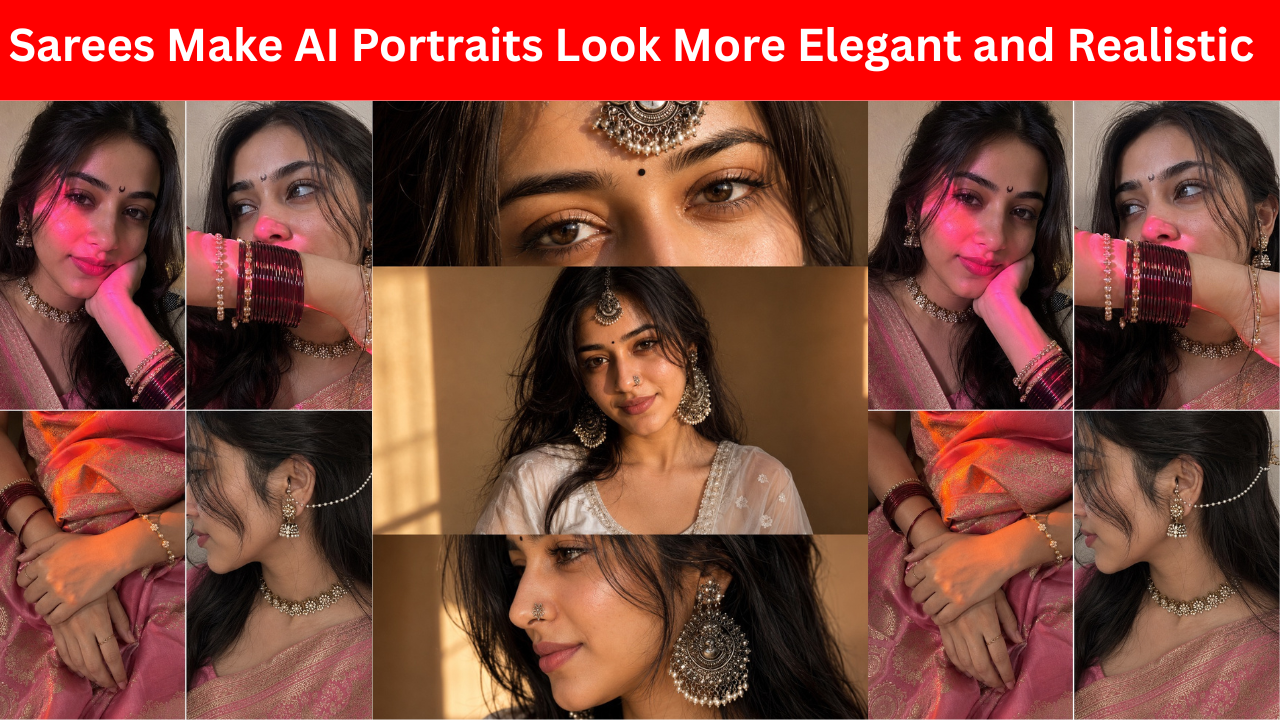
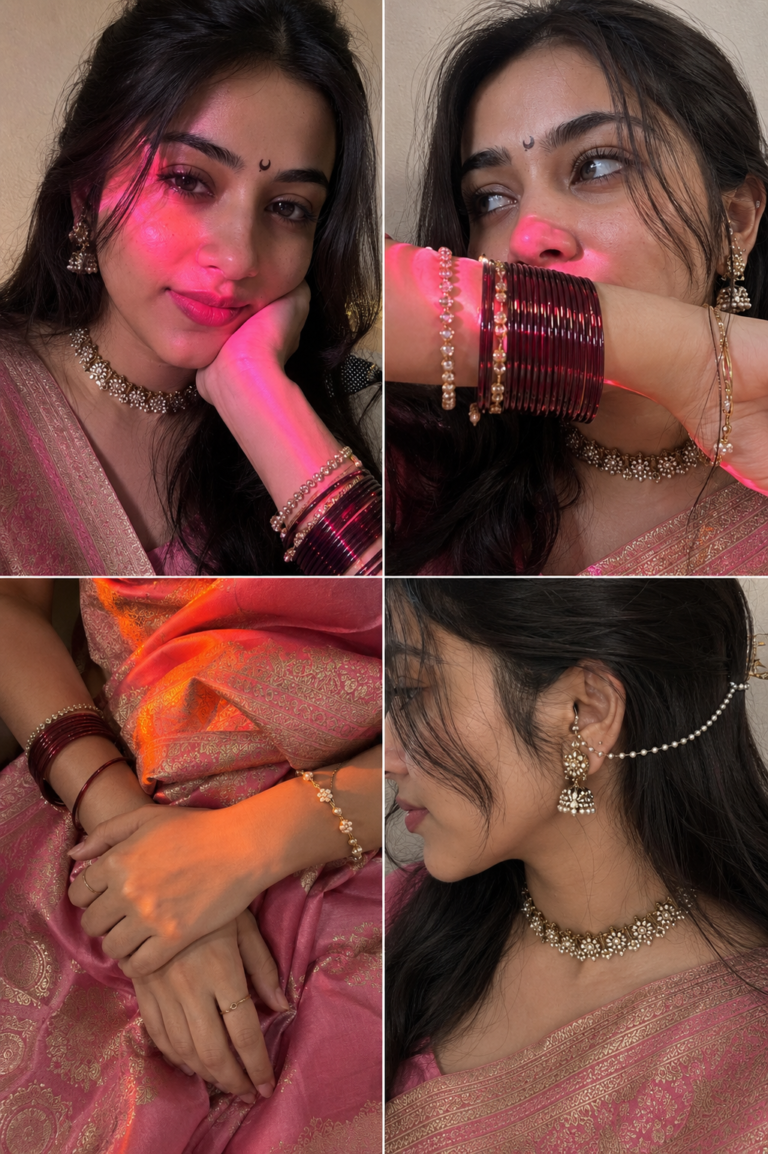
Most discussions of AI-generated portraits examine the facial features, attempting to find the exact moment in which the image stops being real. This is only natural, as the face usually attracts the most attention. The rest of the clothing, meanwhile, serves its primary purpose of accentuating the person in the photograph. Specifically, the pink saree appears to serve this role exceptionally well.
The Appeal of the Pink Silks Saree
AI-generated photography has seen a rise of pink silk sarees in the past several months, as content creators realized the subtle benefits of using such an item in a portrait.
Why Pink?
While other colors experience fluctuations in popularity, pink has remained a staple in Indian ethnic fashion for a long time, with good reason. Compared to brighter colors that would clash with a portrait, pink produces superior results. Its added warmth helps complement multiple skin tones, as well as bringing the overall image together. A similarly good result can be achieved with blush-colored clothing, for an extra layer of subtlety. Such a combination would also create a pleasing interplay of light and shadows, needed to mask minor imperfections of an AI-generated image.
The Unseen Qualities of Banarasi Silk Fabric
As mentioned, pink sarees tend to appear in AI portraiture more frequently than other types of clothing. This could possibly be due to the relative softness of the silk material, which creates a certain degree of lighting on the person being portrayed. Gold zari threads woven into the fabric create a sense of affluence, which is further emphasized by the traditional patterns of the Banarasi silk sarees. Together, they manage to combine authenticity and artificiality, creating an image that resembles a real photograph.
The Search for Authenticity
AI-generated images aim to imitate real-life photographs as realistically as possible, and portraiture is one of the primary tasks in such a project. This particular genre lends itself incredibly well to the use of traditional ethnic clothing, as the two possess many qualities in common. In particular, the use of a saree in an AI-generated selfie allows the image to become more familiar, almost as if the viewer is meeting the subject for the first time.
A Multitude of Subtle Details
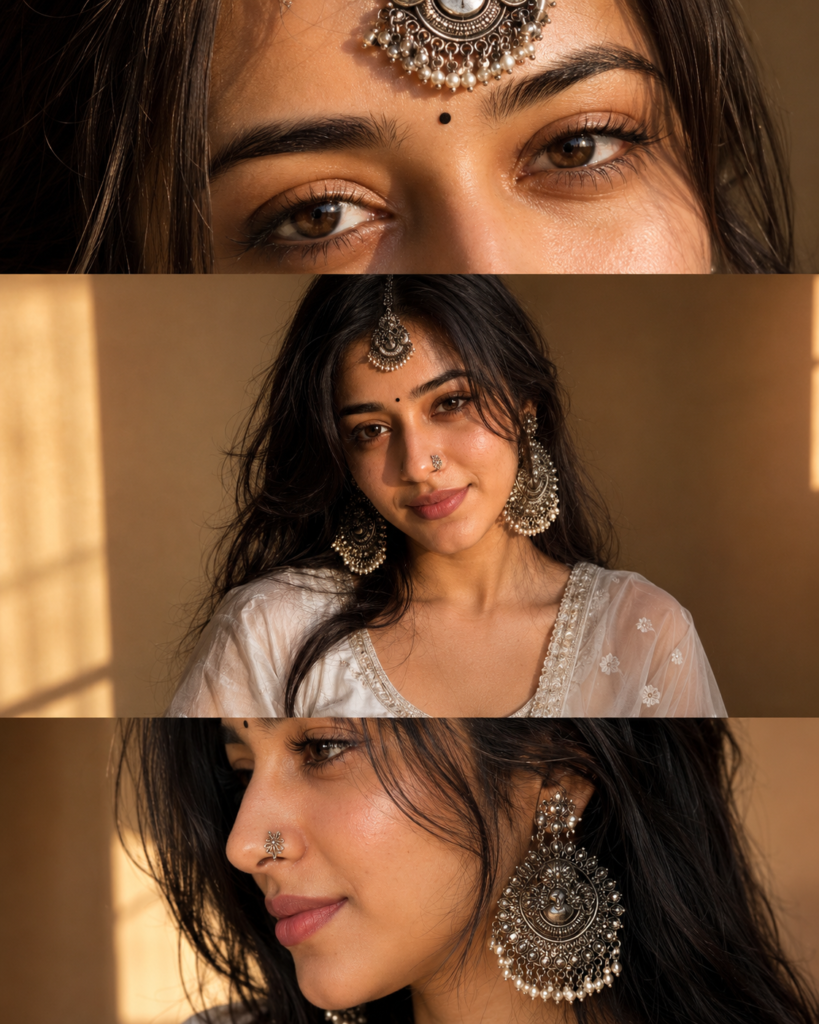
Realism in an AI-generated image rarely comes down to a single attribute, however. More often than not, it is the combination of several, working together, that grants a character a degree of recognition as a real person. Aside from the clothing, the lighting and minor imperfections in the skin need to be taken into account as well. A few strands of hair out of place, a couple of blemishes, the right lighting and furnishing can transform an unrealistic image into a fully immersive experience.
The Jewelry That Completes an Outfit
Traditional jewelry goes hand in hand with traditional ethnic clothing, and the two together create an unforgettable visual. When it comes to AI-generated portraits, however, less can often be more. Putting on too many pieces of jewelry defeats the purpose, as they begin to compete with each other for the viewer’s attention. Pearls, in particular, create a lovely complement to the blush pink of a Banarasi saree. At the same time, gold currency coins create a striking image when worn with a pink and gold zari saree – not least due to the juxtaposition of the traditional and the modern.
The Fusion of Tradition and Modernity
The sheer concept of an AI-generated portrait made with traditional ethnic clothing is fascinating, as it is a meeting of two very different things. The intricacies of the Banarasi silk saree have been developed for centuries, while the AI software is, at the time of writing, barely capable of producing a convincing image of a human face. The two, when combined, create a lovely aesthetic, in which none of the components overpower the other.
Less Can Often Be More
When it comes to an AI-generated image, one would assume that greater detail and realism would be better. An image that incorporates too many bright colors, too many accessories and overly dramatic lighting, however, often fails to impress. In many ways, it could be considered the opposite of a movie poster – the more subdued lighting and the relative plainness of the background combine to create a sense of a genuine, everyday experience. A similar one is created by the use of a phone camera in a photograph – and such an aesthetic can be favored by the AI-generated image as well.
Subtlety with Drama
It is not surprising that many seek to capture the feeling of a dramatic scene in an AI-generated portrait. More often than not, the attempt is unsuccessful, as the unrealisticity of such an image makes it stand out as unauthentic. A neutral expression, on the other hand, is easily understood by the viewer and creates a similar impression to a photograph. As such, a natural facial expression should always be favored in an AI portrait, as it creates a stronger impression than any other.
The Role of Natural Lighting
In many ways, the authenticity of an image is determined by the source of its lighting. As smartphones have become ubiquitous in recent years, so has the use of their cameras in social media. The aesthetics of a casual snapshot differs very little from an authentic portrait, which is why the lighting and other components of an AI-generated image should be adjusted to resemble it as closely as possible.
The Fusion of Tradition and Aesthetics
Ultimately, this discussion serves as an examination of the popularity of traditional ethnic clothing in AI-generated portraits. The pink saree is a wonderful addition to such an image, as it combines its traditional qualities with the rising authenticity standard of AI-assisted content. Its relatively neutral color palette blends well with the majority of human skin tones, while the silk fabric manages to present the viewer with lighting and shadow, similar to a real photograph. Of all the options in ethnic clothing, the saree appears to have the most advantages when incorporated into an AI portrait.
Color Harmony
The reasons why a pink saree appears to serve its purpose so well in an AI-generated image ultimately come down to basic color theory. Compared to other color palettes, pink manages to blend in with the majority of skin tones in a way that few other colors can manage. As a relatively neutral hue, it complements the golden brown of traditional gold jewelry and the ivory folds of the saree itself, and highlights the beauty of the subject in the image. Professional photographers have long utilized blush-colored clothing for similar reasons – and AI portrait programs are only beginning to appreciate the benefits.
An Authentic Image Needs More Than Perfection
An authentic image rarely comes down to one single factor – as aforementioned, it is more often a synergy of several smaller effects. Even within the individual components, realism is difficult to convey – which is why a genuine smile in an AI-generated portrait will often surpass all others. This, ultimately, is the secret to creating an authentic image in AI-assisted photography – and the rest is simply practice.
Discover more from viraldost.com
Subscribe to get the latest posts sent to your email.